
Nerve sheath tumors are growths that develop in the protective covering of nerves. They are categorized into two main types:
- Benign Nerve Sheath Tumors (non-cancerous)
- Malignant Peripheral Nerve Sheath Tumors (MPNSTs) (cancerous)
Benign Nerve Sheath Tumors
These are the most common type and typically do not spread to other tissues or organs. Examples include:
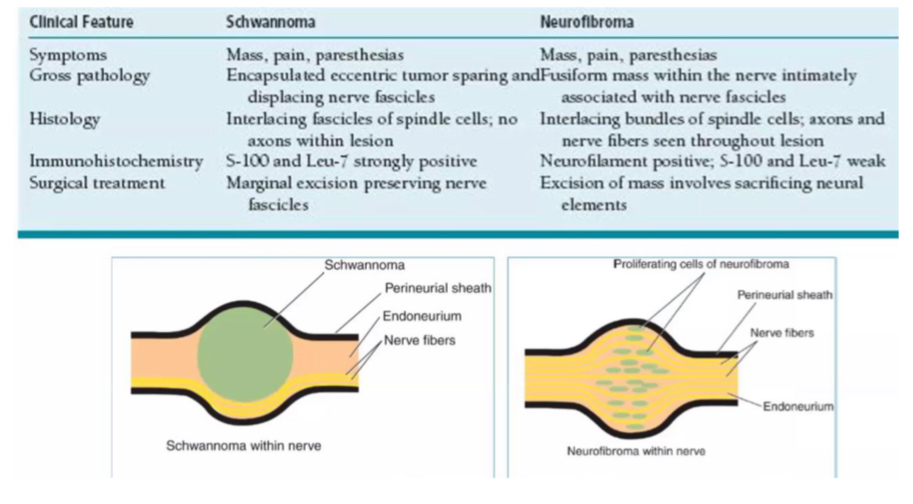
- Schwannomas
- Neurofibromas
- Perineuriomas
- Granular Cell Tumors
- Ganglioneuromas
Common Types of Benign Tumors
- Schwannoma
- Affects about 20 people per million each year.
- Most common benign peripheral nerve tumor (80%).
- Occurs equally in men and women, typically between ages 20-50.
- Originates from the protective sheath around nerves.
- Usually grows slowly (1-2 mm/year) and often found as a single lump.
- A firm, movable lump causing localized pain or radiating discomfort.
- Rarely causes muscle weakness.
- Neurofibroma
- Often associated with Neurofibromatosis Type 1 (NF1) but can occur without NF1.
- Can involve one or multiple nerve bundles.
- May occasionally turn into a malignant tumor.
Malignant Peripheral Nerve Sheath Tumors (MPNSTs)
These are rare but aggressive tumors.
- Higher risk in patients with NF1 or those with previous radiation exposure.
- 5-year survival rate after treatment is about 50%.
Signs to Watch For:
- Rapidly growing lump.
- Muscle weakness near the tumor.
- MRI showing irregular margins or invasion into surrounding tissues.
Diagnosing Nerve Sheath Tumors
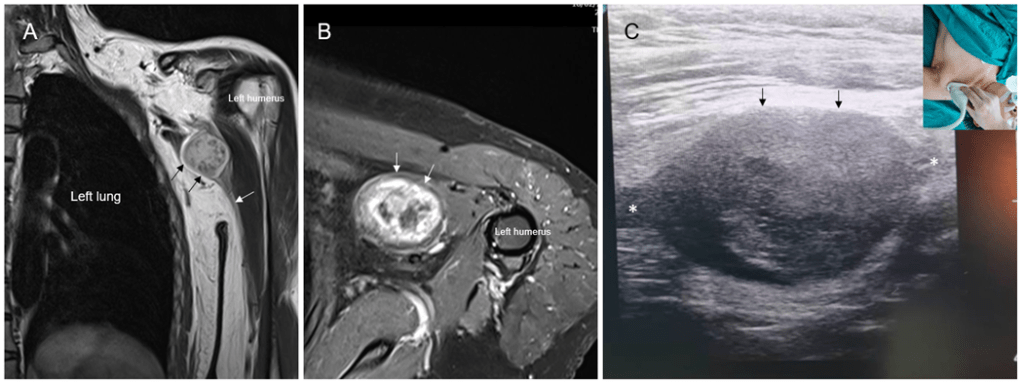
- MRI (Magnetic Resonance Imaging)
- Best tool for identifying tumors, their boundaries, and relationships to nearby tissues.
- Ultrasound
- Used as a preliminary screening tool and during surgery to locate deep-seated tumors.
- Biopsy
- May be necessary if a tumor is suspected to be malignant.
Treatment Options
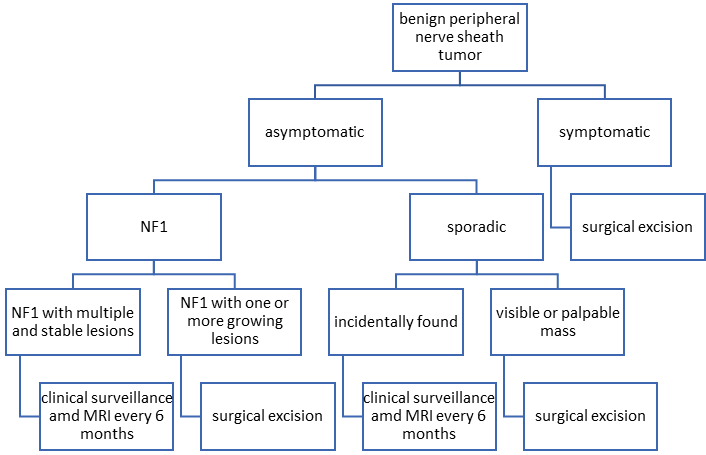
- Benign Tumors
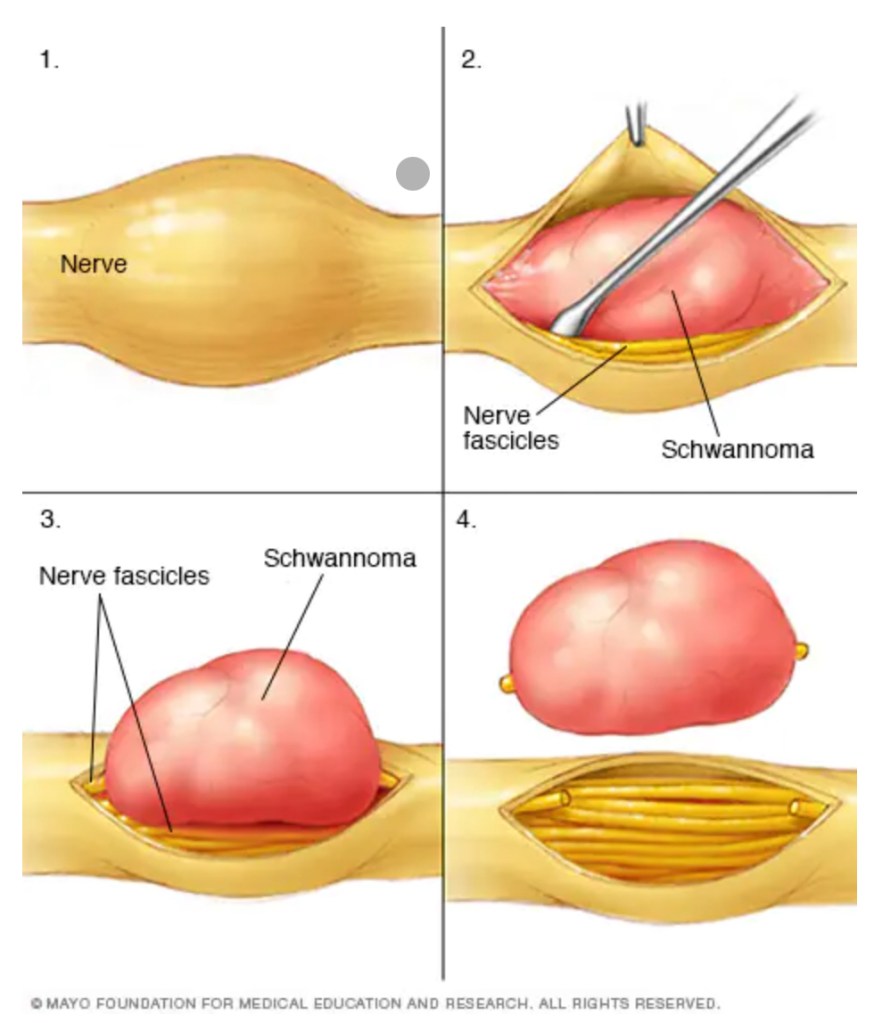
- Surgery is recommended if the tumor causes pain or grows significantly.For asymptomatic and stable tumors, regular monitoring may suffice.
- Surgical Approach:
- Surgeons aim to preserve normal nerve function by carefully removing the tumor while leaving healthy nerve tissue intact.
- Special techniques like nerve stimulation during surgery may be used to ensure safety.
- Malignant Tumors
- Treatment often includes surgery combined with chemotherapy or radiation.
- Early detection improves outcomes.
When to See a Doctor
- A noticeable lump near a nerve.
- Persistent pain in the area of the lump, or the area that the nerve supply.
- Muscle weakness.
Contact Information
For more information or to schedule a consultation, please contact us
Disclaimer
This fact sheet is for informational purposes only and is not intended as a substitute for professional medical advice, diagnosis, or treatment. Always seek the advice of your physician or other qualified healthcare provider with any questions you may have regarding a medical condition or treatment options.
The information provided here reflects general practices and may not apply to your individual health circumstances. Outcomes and risks may vary depending on your medical history, condition, and response to treatment.
If you experience any concerning symptoms or side effects following a procedure, contact your healthcare provider immediately or seek emergency medical attention.
This material is not intended to promote or endorse any specific treatment or procedure. Decisions about your healthcare should always be made in consultation with your physician, considering your unique health needs and goals.
 Ekkapot Jitpun, MD
Leave a comment