
Nerve tumors are abnormal growths that develop in or around the nerves. While many are benign (non-cancerous), they can still cause significant symptoms depending on their size and location. In rare cases, nerve tumors may be malignant (cancerous) and require more aggressive treatment.
What Are Nerve Tumors?
Nerve tumors can grow in various parts of the nerve, including its fibers or the protective layer surrounding it. Common types of nerve tumors include:
- Schwannomas
- Develop from Schwann cells, which create the insulating layer around nerves.
- Usually benign and slow-growing.
- Neurofibromas
- Tumors that grow within the nerve itself, making them more challenging to remove.
- Often associated with a genetic condition called neurofibromatosis.
- Malignant Nerve Tumors
- Known as malignant peripheral nerve sheath tumors (MPNST), these are rare but aggressive.
- Require immediate and intensive treatment.
Symptoms of Nerve Tumors
Symptoms depend on the tumor’s size and location. Common signs include:
- Neuropathic pain: Pain at the tumor site, which may radiate to the area supplied by the affected nerve.
- Numbness and tingling: Sensory changes in the region served by the affected nerve.
- Lump: A visible or palpable lump under the skin.
- Muscle weakness: Rare with benign nerve tumors. However, if weakness occurs, it may indicate a malignant condition and requires prompt medical evaluation.
Diagnosing Nerve Tumors
Accurate diagnosis involves a combination of clinical evaluation and imaging:
- Medical History and Examination
- Imaging Tests
- MRI: Provides detailed pictures of nerves and surrounding tissues.
- CT Scans: Useful for understanding the tumor’s location near bones.
- Ultrasound: Often used for smaller, superficial tumors.
- Biopsy
Biopsy is typically not performed if imaging strongly suggests the tumor is benign. However, in cases where the diagnosis is uncertain, a small sample of the tumor may be taken to confirm whether it is benign or malignant.

C: Intraoperative ultrasound was used to identify the location of nerve tumor, and help guiding the surgical incision and exploration
(images used with consent)
Treatment Options for Nerve Tumors
Treatment depends on the tumor’s type, location, and symptoms:
- Observation
- Small, harmless tumors that aren’t causing symptoms may only need regular monitoring.
- Surgery
- The most common treatment for nerve tumors, aiming to remove the growth while preserving nerve function.
- Advanced microsurgery techniques are used to reduce the risk of nerve damage.
- Radiation Therapy
- Sometimes used after surgery or for tumors that can’t be completely removed.
- Chemotherapy
- Typically reserved for malignant tumors that have spread.
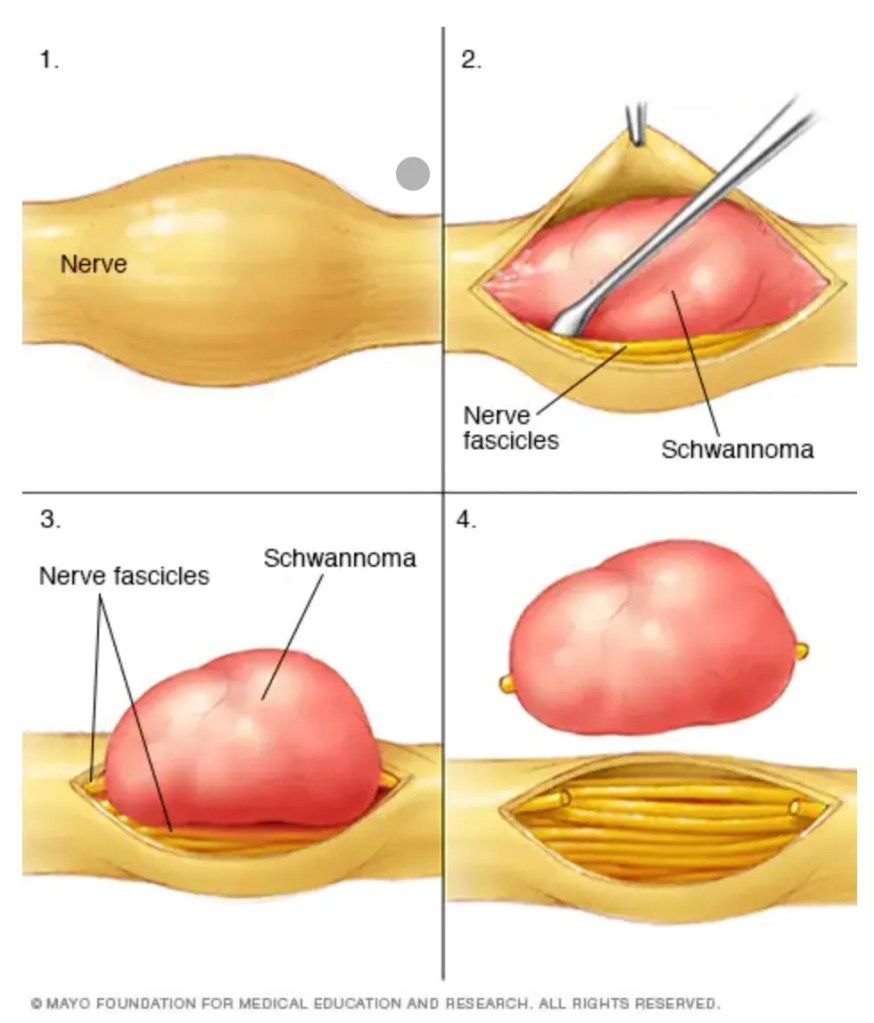
@Mayo Foundation
When to Seek Help
If you notice persistent pain, numbness, or a lump along a nerve pathway, it’s important to see a doctor. Early diagnosis and treatment can prevent complications and improve outcomes.
Disclaimer
This fact sheet is for informational purposes only and is not intended as a substitute for professional medical advice, diagnosis, or treatment. Always seek the advice of your physician or other qualified healthcare provider with any questions you may have regarding a medical condition or treatment options.
The information provided here reflects general practices and may not apply to your individual health circumstances. Outcomes and risks may vary depending on your medical history, condition, and response to treatment.
If you experience any concerning symptoms or side effects following a procedure, contact your healthcare provider immediately or seek emergency medical attention.
This material is not intended to promote or endorse any specific treatment or procedure. Decisions about your healthcare should always be made in consultation with your physician, considering your unique health needs and goals.
 Ekkapot Jitpun, MD